Active Roof Leaks
Sudden leaks during heavy rainfall can damage ceilings, insulation, walls, flooring and belongings. We trace the likely entry point and plan temporary or permanent protection.
Serving Conroe, Texas & surrounding areas
Mon–Sat 9am–6pm · Sun Closed
Stop the Water. Limit the Damage. Restore Your Peace of Mind.
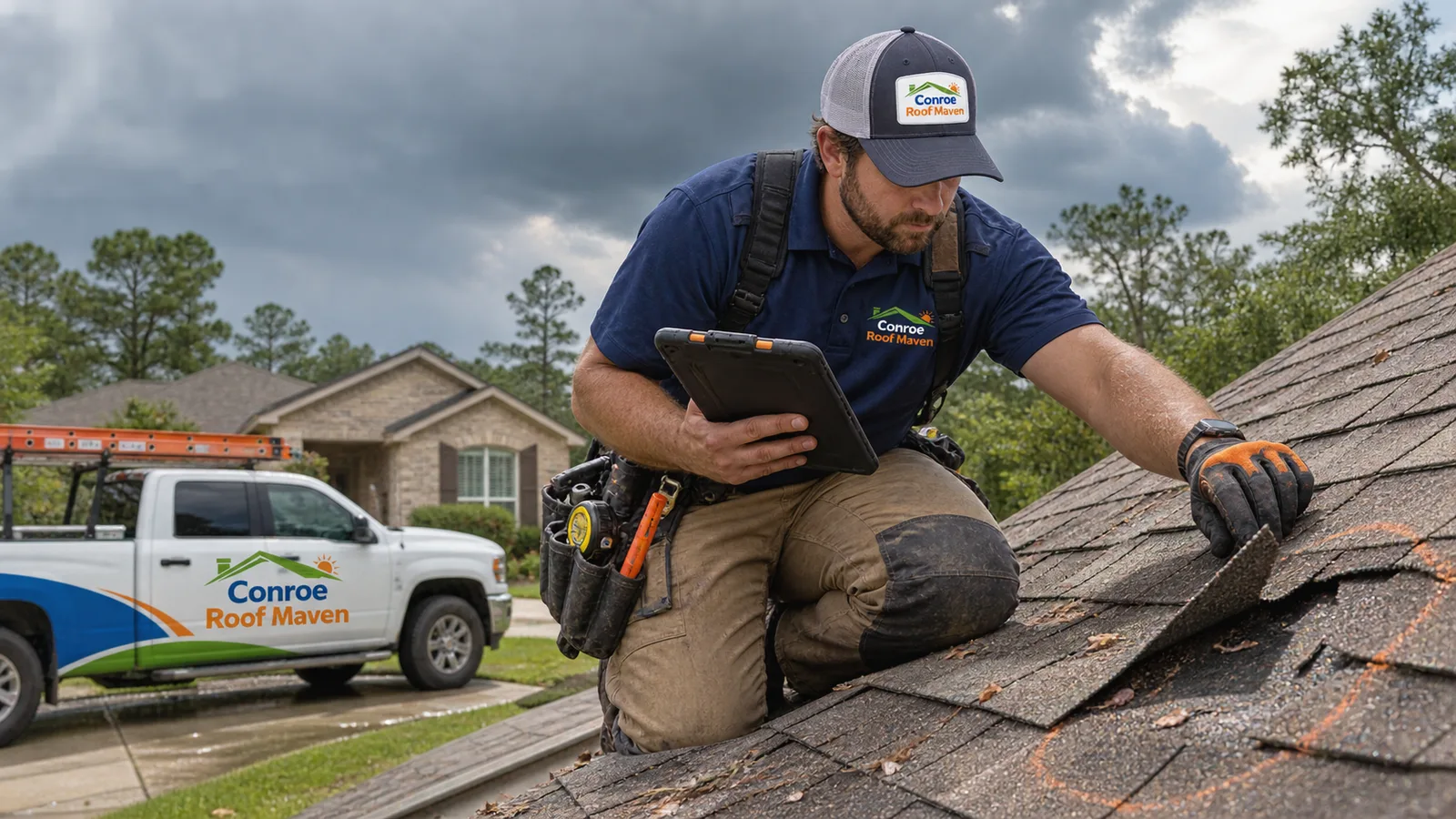
Water coming through the ceiling, shingles missing after a storm, or a tree limb on the roof can feel overwhelming. Conroe Roof Maven provides prompt emergency roof repairs and temporary roof protection during our regular service hours: Monday through Saturday, 9am–6pm. Response timing depends on weather, safety and crew availability.
Available Mon–Sat, 9am–6pm. If there is fire, electrical danger, a possible ceiling collapse or an immediate threat to life, leave the affected area and call 911.
When rainwater starts coming through the ceiling, your sense of security can disappear quickly. You may wonder how much damage has already occurred, whether the building is safe, what repairs will cost and whether you will be pressured into replacing a roof that can still be repaired.
Business owners may also be facing wet inventory, damaged equipment, interrupted operations and concerns for employees or customers. Conroe Roof Maven approaches the entire problem with empathy: protect people first, limit additional water intrusion, explain practical options and recommend an economical permanent repair whenever one is dependable.
You already have enough problems. Your roofing contractor should not become another one. For broader non-emergency work, visit our permanent roof repair service or review roofing options in Conroe.
If water is actively entering your home or business, protect people before property. Keep everyone away from sagging or bulging ceilings, wet electrical outlets, switches, light fixtures and appliances.
If you suspect an electrical fire, imminent ceiling collapse or serious structural danger, leave the affected area and call 911. Roofing repairs do not make damaged electrical systems safe; qualified electrical or restoration specialists may also be necessary.
Sudden leaks during heavy rainfall can damage ceilings, insulation, walls, flooring and belongings. We trace the likely entry point and plan temporary or permanent protection.
Falling branches and debris can puncture roofing materials, break decking or expose the building. Tree removal and structural work may require separate qualified specialists.
Strong winds can loosen or remove shingles and expose underlayment or decking to wind-driven rain. Small damaged areas may be repairable without replacing the entire roof.
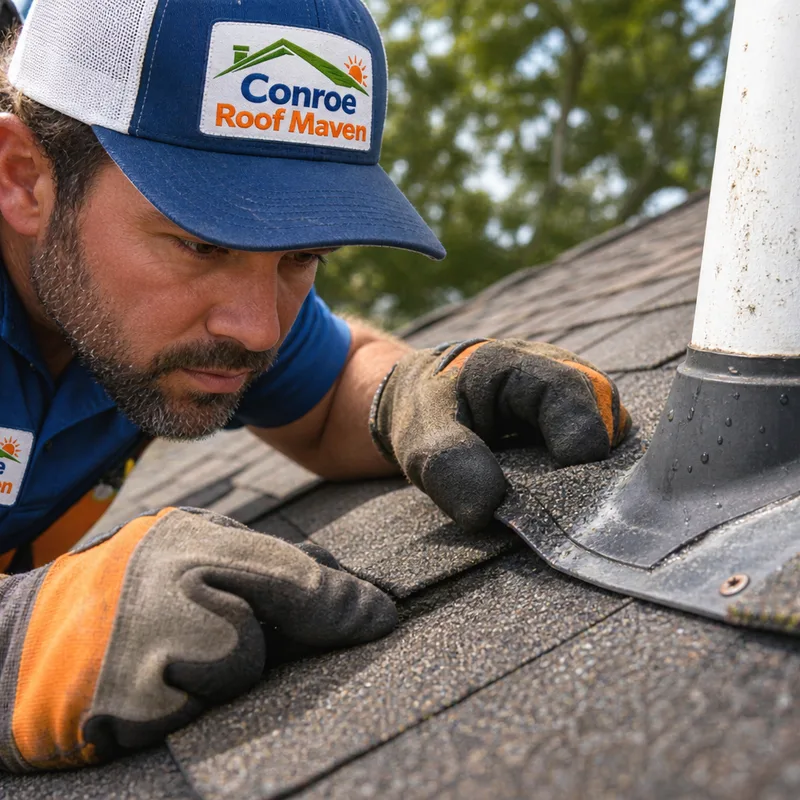
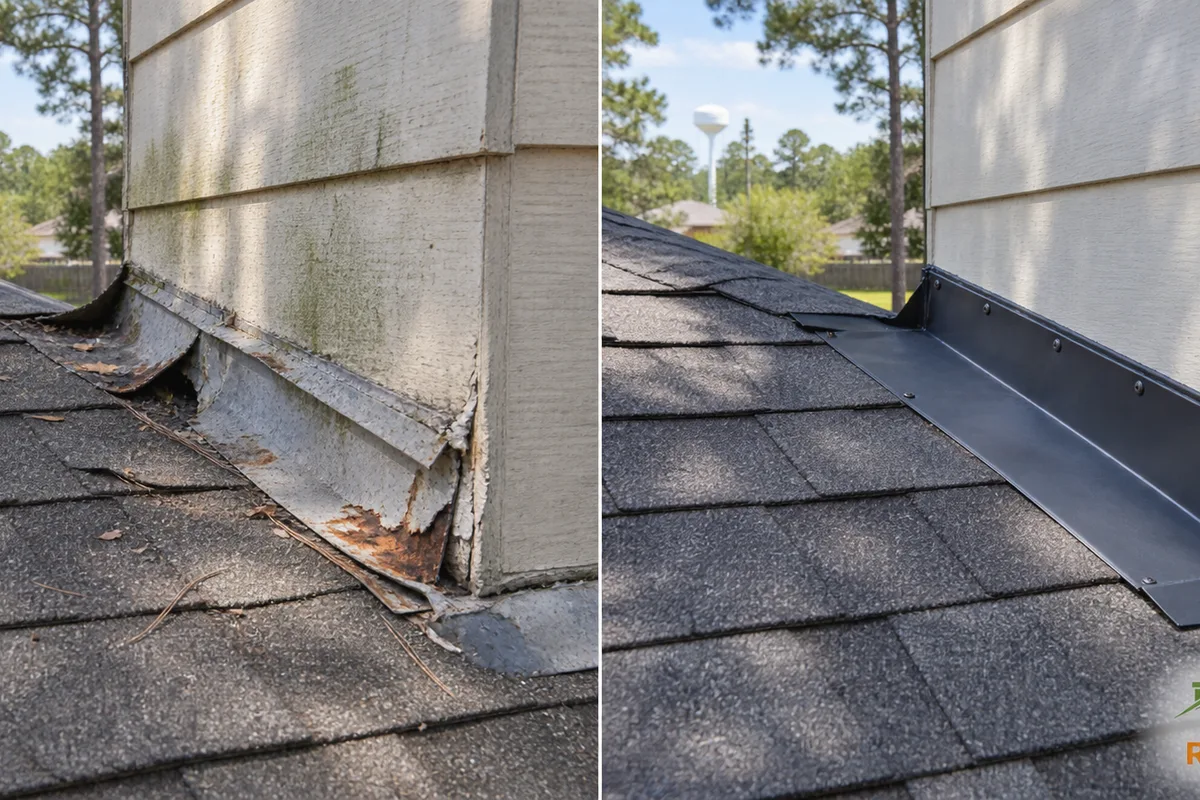
Failed flashing around chimneys, skylights, valleys, pipe boots and other penetrations can create sudden or persistent leaks that require source-based diagnosis.
Loose panels, failed fasteners, damaged seams and punctures can compromise a metal roof. Visit our metal roof repair page for specialized information.
Membrane punctures, failed seams, flashing defects and drainage problems can interrupt business operations. We assess residential and selected commercial roofing systems that we service.
Temporary roof protection may be appropriate when severe damage leaves shingles, underlayment or decking exposed and permanent repairs cannot be completed immediately because of weather, safety or material availability.
A properly secured tarp can help limit continued water intrusion after missing shingles, falling limbs, punctures or flashing damage. Installation must fit the roofing material, roof configuration and safe anchoring points. A poorly installed tarp can loosen in wind or redirect water into another vulnerable area.
Emergency tarping is temporary protection—not a permanent roof repair. Our goal is to stabilize the exposed area when practical, identify the actual source of water entry and explain a dependable permanent repair plan.
Step 1 of 5
Describe what you're experiencing
Describe the water damage you see
Tell us when the problems began.
Step 2 of 5
We investigate the damage and identify the likely source of the problem.
We will show you photographs of the damage we will find.
Step 3 of 5
You receive a clear explanation and proposed repair plan before work begins.
(Roof tarping may be needed.) We will mention your homeowner's insurance.
Step 4 of 5
We perform the approved repairs using materials appropriate for your existing roof. WE will remove the debris.
Step 5 of 5
We explain what was corrected and identify any unrelated concerns that deserve your attention. The repair work will be inspected by a third party.
Broad estimates for planning purposes include small-area emergency tarping at $250–$800; extensive tarping at $800–$2,500+; active localized leaks at $350–$1,500; missing shingles at $350–$1,000; damaged vents or pipe boots at $300–$750; flashing repairs at $350–$1,500; roof punctures at $500–$2,500+; fallen-limb damage at $800–$5,000+; and damaged decking or structural roofing components at $1,500–$6,000+.
These are broad estimates—not quotes. Roof height, pitch, access, material, damage extent, timing, concealed moisture and decking condition affect the written estimate. Tree removal, electrical work, water extraction, mold remediation and interior restoration are separate services. Financing options may be available for qualifying projects, subject to lender approval and terms.
Repair what can be repaired. Protect your property now, then complete the permanent work your roof actually needs.
Call (936) 241-4990Emergency roof repair in Conroe can begin as soon as the same day—with emergency calls prioritized Monday through Saturday from 9:00 AM to 6:00 PM (closed Sundays) and response times depending on active weather, crew safety, roof access, and storm demand. You can also check the Conroe Roofers homepage to book a free inspection or call Orlando at (936) 241-4990 to schedule service.
Many straightforward residential installations can be completed in one working day, while large, multistory, or complex rooflines may take longer. Fascia repairs, difficult access, numerous corners, weather, and custom materials affect the schedule. The expected duration should be established after measuring the eaves and checking the attachment surfaces.
Damaged fascia should be repaired or replaced before gutters are secured to that area. Hidden hangers need sound material to hold the gutter under the weight of water and debris. Fastening a new system over soft or split wood can lead to loose hangers, sagging runs, and renewed overflow. The roof edge should be inspected before the installation scope is finalized.
Gutter guards can reduce larger debris, but no guard eliminates inspection and cleaning. Fine pine needles, seed material, roof granules, and windblown debris may collect on top or enter through openings depending on the guard design. The best choice depends on nearby trees, roof pitch, gutter profile, and whether the system remains accessible for maintenance.
Downspouts should discharge far enough away that water continues moving away from the foundation instead of soaking back beside it. There is no single extension length for every Conroe property because grading, planting beds, walkways, lot drainage, and neighboring structures differ. The outlet should not create a tripping point or direct runoff toward an entry, driveway, or adjacent property.
A localized leak can often be repaired when the surrounding gutter is structurally sound and properly sized. Failed sealant at an end cap or miter, a loose hanger, or a short damaged section may be repairable. Replacement is usually the better choice when corrosion is widespread, the gutter is badly distorted, multiple seams fail, or the existing layout cannot handle the roof runoff.
Proper gutter installation should not require fastening through the shingle surface. The gutter is typically attached at the fascia, with its position coordinated with the drip edge so runoff enters the trough. Existing drip-edge problems, lifted shingles, or deteriorated roof-edge materials should be identified before work begins rather than concealed behind the new gutter.
Protect your home, business and budget. Call during Mon–Sat, 9am–6pm, or request a free inspection. Small repairs are welcome, financing may be available subject to lender approval, and qualifying repairs include a one-year workmanship guarantee with written coverage terms.
Start Here